Yesterday was a good lesson. Too big pace, and too ambitious plan. I concluded I need to choose only a few attractions to visit in one day, bearing in mind that I have to take it slowlier during this trip... But slowlier also means that I have to wake up and leave earlier, as I already know that Japanese attractions close early.
I bought my tickets (= I reserved my seats on the train) already in advance. For the first time I will take the Shinkansen - bullet train :) The platform does not let you to get lost or to miss your wagon. There are signs indicating where exactly will be the entrance to exactly which wagon. There are also signs indicating where the queue should start and where is the queue for people holding first and second class tickets. Japanese are very respectful of rules and obey all of them.


The train is full of Western tourists, still Nikko is definitly less crowded than Kamakura the day earlier. It's much more pleasant to visit. Today I decide to visit three main attractions of Nikko.
At the Nikko's train station I buy the Heritage Bus ticket (500 yen), which is a return ticket to the main attractions of Nikko. It brings me to the furthest one - Taiyuin-byo - mausoleum of the third Tokugawa shogun, Iemitsu - the grandson of Ieyasu. What I learn only later, this mausoleum reminds the one of Ieyasu in its layout and architecture, but it was intentionally built in more modest way. The Taiyuin-byo features a mix of Buddhist and Shinto structures.


But creme de la creme of Nikko is the Tosho-gu shrine - a World Heritage Site and the most beautifully decorated shrine in Japan. It's just a few minutes walk from the Taiyuin-byo. It's here where the Tokugawa Ieyasu - the founder of the Tokugawa Shogunate that ruled Japan for over 250 years - is burried. Initially it was just a simple mausoleum, but Ieyasu grandson - Iemitsu (so the guy burried in the first temple I visited) made it such an exquisite and spectacular place. The shrine itself consists consists of several buildings set in a forest. When I entered it, I just wanted to say WOW! It really looked amazing and more and more I was looking at the colourful buildings, more and more of beautiful details, carvings and decorations I saw. Such rich architecture was a novelty in Japan, where simplicity was rather prevailing.
I rented an audio-guide and it was also an experience as such. The audio-guide was accompanied by a plastic map with numbers and a "reading pen". I could see on the map which building I was visiting, touch its number with the pen, and the description was being played :)
Unfortunately some parts of the Toshogu-shrine were being renovated, including the Yomeimon Gate - apparently the most beautiful gate in Japan. Still, even with these constructions, it was a very impressing complex.

At the Nikko's train station I buy the Heritage Bus ticket (500 yen), which is a return ticket to the main attractions of Nikko. It brings me to the furthest one - Taiyuin-byo - mausoleum of the third Tokugawa shogun, Iemitsu - the grandson of Ieyasu. What I learn only later, this mausoleum reminds the one of Ieyasu in its layout and architecture, but it was intentionally built in more modest way. The Taiyuin-byo features a mix of Buddhist and Shinto structures.


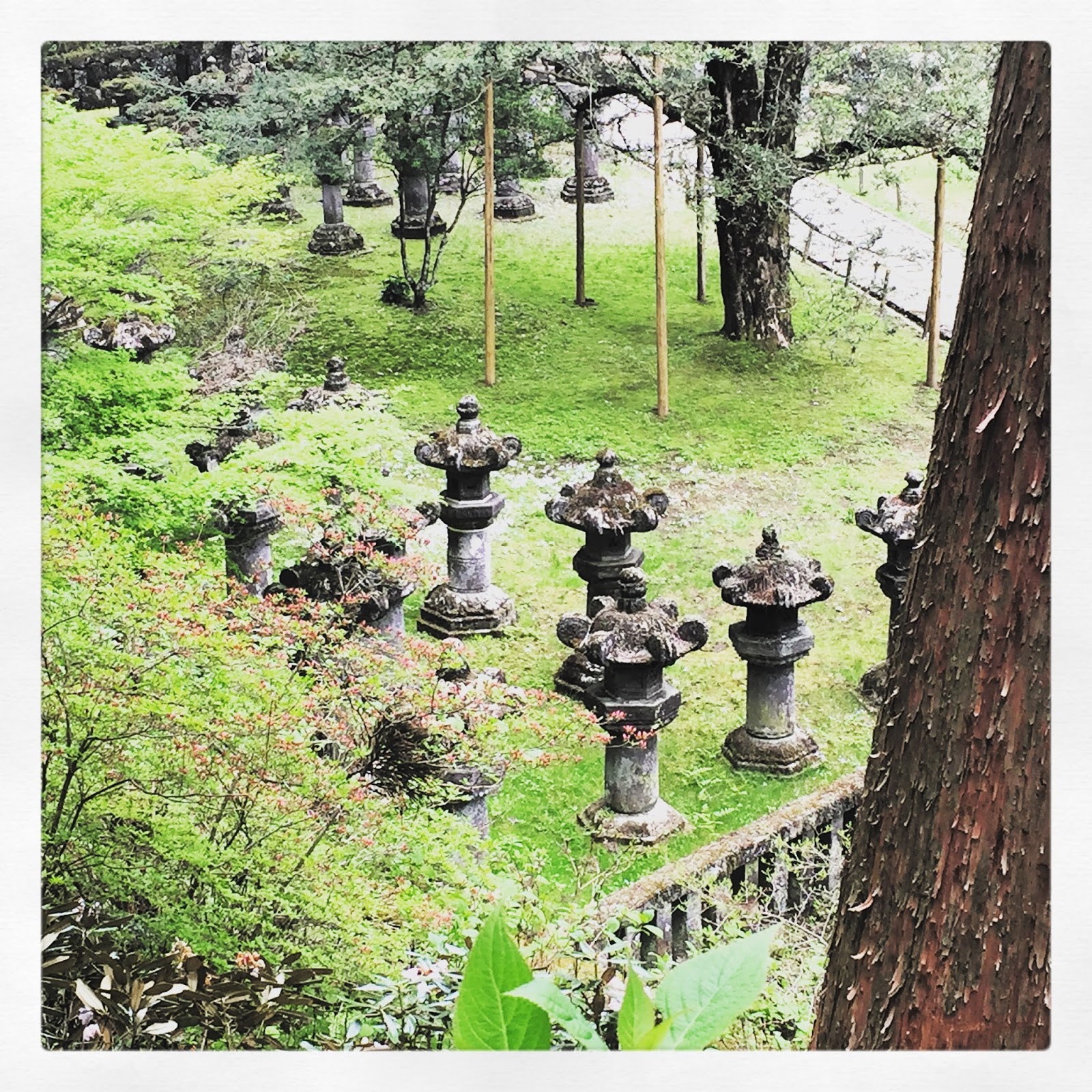


But creme de la creme of Nikko is the Tosho-gu shrine - a World Heritage Site and the most beautifully decorated shrine in Japan. It's just a few minutes walk from the Taiyuin-byo. It's here where the Tokugawa Ieyasu - the founder of the Tokugawa Shogunate that ruled Japan for over 250 years - is burried. Initially it was just a simple mausoleum, but Ieyasu grandson - Iemitsu (so the guy burried in the first temple I visited) made it such an exquisite and spectacular place. The shrine itself consists consists of several buildings set in a forest. When I entered it, I just wanted to say WOW! It really looked amazing and more and more I was looking at the colourful buildings, more and more of beautiful details, carvings and decorations I saw. Such rich architecture was a novelty in Japan, where simplicity was rather prevailing.
I rented an audio-guide and it was also an experience as such. The audio-guide was accompanied by a plastic map with numbers and a "reading pen". I could see on the map which building I was visiting, touch its number with the pen, and the description was being played :)
Unfortunately some parts of the Toshogu-shrine were being renovated, including the Yomeimon Gate - apparently the most beautiful gate in Japan. Still, even with these constructions, it was a very impressing complex.


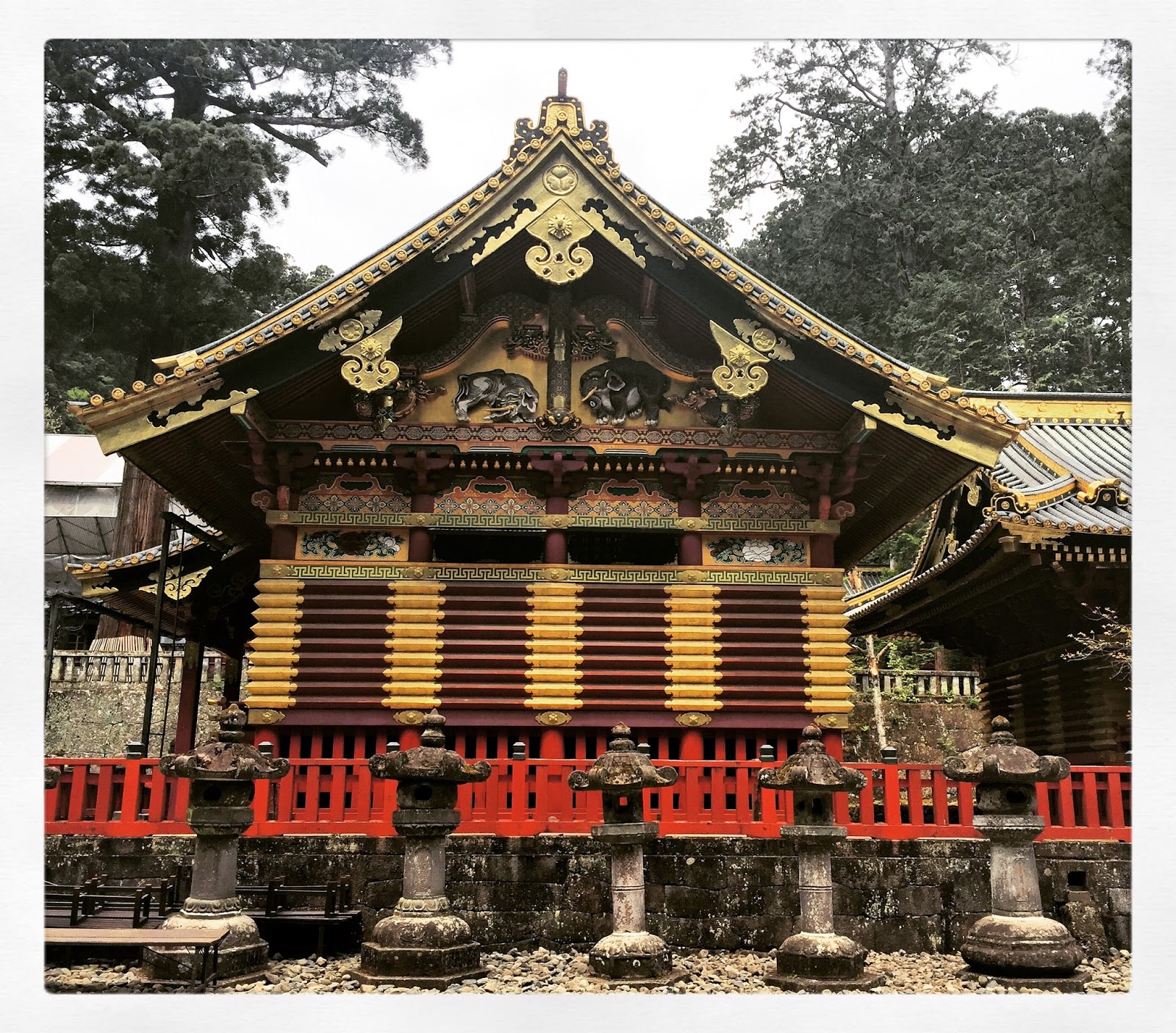


The tomb of Ieyasu is rather simple and modest compared to all the surroundings.


On the way out I passed by the third attraction - Rinnoji Temple, which is Nikko's most important temple. Unfortunately the entire building is currently under renovation, but it was a highly interesting experience to see how meticulously the Japanese do these things. Basically they built an entire solid metal construction covering the temple, and within it they renovate the temple. Some of the temple's belongings were displayed.


Sacred Shinkyo Bridge at the entrance to Nikko's shrines.

And although there are no more cherry blossoms in Japan, I still see plenty of flowers all around, including these beautiful fuchsia blossoms :)


