This trip will be like no any other. Although most of it I will do on my own, in reality I will be travelling with a little passenger in my belly. It is supposed to be my last crazy (although I cannot be very very crazy) trip (at least for some time).
Where to go so the baby and myself are safe? I concluded that the best choice would be Japan - with no zika, no malaria and great medical care. Still - very exotic and different from everything I have seen so far.
I chose the shortest possible flight - via Franfurt - and after 14h I land in Japan. My very first impression is border guards' inneficiency - it took at least half an hour to go through border security. I expected Japanese to be better organized. My second impression - which I will see many more times during my stay in Japan - is a guy who is "managing" the queue. I will see many people responsible for queues (although - there is a queue! - so everybody knows their order), for traffic (although there are the traffic lights! so there should be no problems either), etc.
After the border control, I head to the train station in order to exchange my Japanese Rail voucher into the Japanese Rail Pass. I bought mine in the Japanese travel agency in Brussels, but they can be also ordered online. However, these passes can be bought only outside Japan. The pass is not very cheap - I paid 500 euro for 21 days, but since the train tickets are in general very expensive in Japan (fast trains on long distances), and with this pass I can take nearly every train of Japanese Rail, I conluded it's a good investment. It will certainly save me some time and will make my trip more comfortable.
In the Japanese Rail office, there's also a big queue, and only after a long wait I realize that as a pregnant woman I have priority. I ask the "director of the queue" and indeed I don't have to wait. She immediately exchanges my voucher and gives me a ticket for Narita Express train (the fastest way to get to Tokyo from Narita airport), apologizing that she hasn't noticed I was pregnant. So different attitude compared to Belgium!!! The Narita Express arrives to the Tokyo Station in less than one hour and I have the last step to make, which is however not the easiest - finding my hotel. The hotel is somewhere in the neighbourhood, but there's nobody to show me the way! Japanese are very nice and friendly, and they very much want to be helpful, but unfortunately they speak very little of English, which makes communication with them almost impossible. Luckily I finally find my hotel - Niohombashi Muromachi Bay Hotel - which is a capsule hotel. Maybe not the most convenient for a pregnant woman, but the price and location are unbeatable! Unfortunately the check-in is possible only as of 5PM, therefore I go for my first walk in Tokyo.
In the Japanese Rail office, there's also a big queue, and only after a long wait I realize that as a pregnant woman I have priority. I ask the "director of the queue" and indeed I don't have to wait. She immediately exchanges my voucher and gives me a ticket for Narita Express train (the fastest way to get to Tokyo from Narita airport), apologizing that she hasn't noticed I was pregnant. So different attitude compared to Belgium!!! The Narita Express arrives to the Tokyo Station in less than one hour and I have the last step to make, which is however not the easiest - finding my hotel. The hotel is somewhere in the neighbourhood, but there's nobody to show me the way! Japanese are very nice and friendly, and they very much want to be helpful, but unfortunately they speak very little of English, which makes communication with them almost impossible. Luckily I finally find my hotel - Niohombashi Muromachi Bay Hotel - which is a capsule hotel. Maybe not the most convenient for a pregnant woman, but the price and location are unbeatable! Unfortunately the check-in is possible only as of 5PM, therefore I go for my first walk in Tokyo.

I arrived to the Imperial Palace Gardens, located just behind the Tokyo Station. They are open to the public, but the Imperial Palace itself isn't. Logical as it's home of the Japan's Emperor :)


After the dinner I return to my hotel. I was wondering how it will be possible for a pregnant woman to sleep in a capsule, but I can say it was a great choice! Niohombashi Muromachi Bay Hotel is excellently located (10-15 minutes from the Tokyo Station), very cheap compared to normal hotels, ultra clean, and what is also important - it has two floors only for women (most of the capsule hotels are only for men). At the entrance I receive slippers (which will be changed every day), as well as clean towels and pyjama (they also will be changed every day). All girls wear the same pyjamas and we all look like the caracters of "Orange is the new black" ;-) The capsule itself is not as small as I expected, I have some privacy in there (a curtain) and in the shower (private cabins). I store my luggage in the locker. Completely exhausted, I slept 14 hours this night.


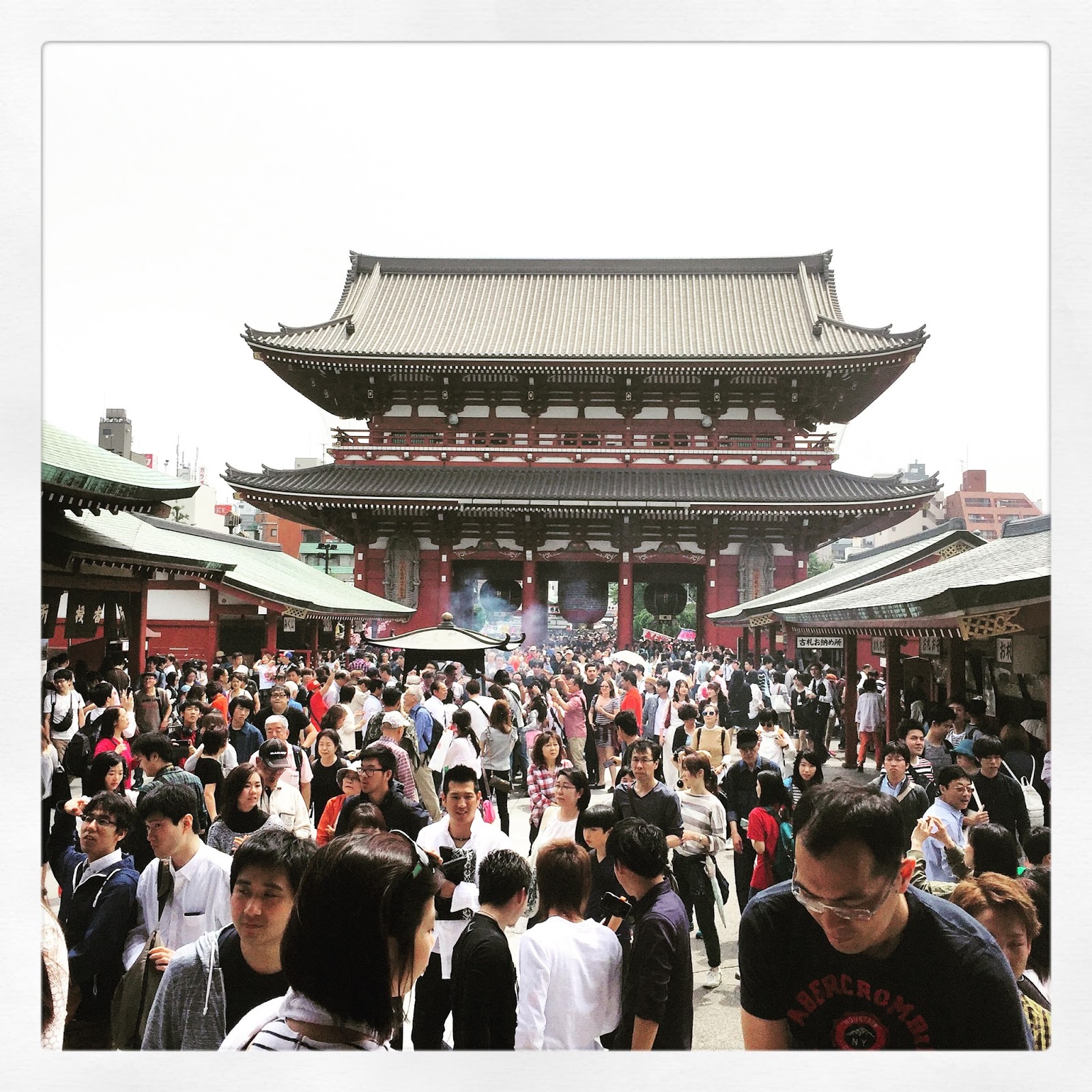
The next day, full of energy, I first head to the Senso-Ji temple. As it looks pretty close on the map, I decide to walk there, to get some understanding of the city. The walk took me one hour.
Senso-Ji is apparently Tokyo's most visited temple and I can really feel that!! Terribly crowded, it's not really a very zen place. Between the Gate and the temple itself there's a shopping street with Japanese souvenirs.


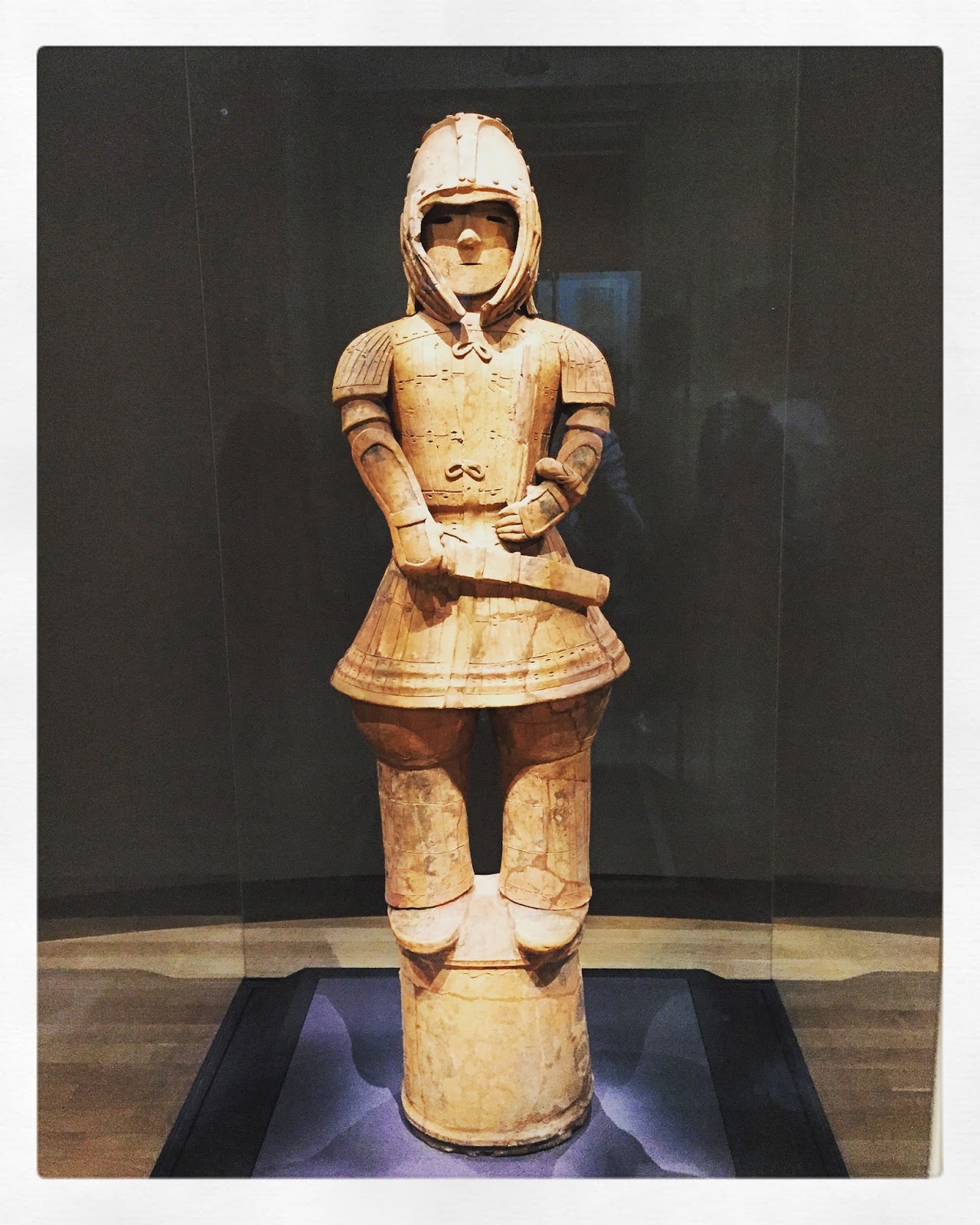
After the temple, I go to the National Museum of Tokyo. It is the oldest and the largest museum of Japan. It features one of the biggest and best collections of arts and archeological artifacts in Japan, including nearly a hundred national treasures. I admire Japanese art, Samurai's swords, Shogun outfits, beautiful kimonos, ancient pottery and many more!




On my way to the next stop - Akihabara - I cross the Ueno Park, which is just in front of the museum.


I head to Akihabara - a district full of neons, electronics, mangas and computer games. I also manage to get here a converter, as Japanese electricity plugs are different than in the EU.


I finish the day at the very famous Shibuya Crossing. This is Tokyo I always had in mind. Full of lights, colors and neons, and obviously full of people.


It was a very exhausting day. But it really gave me a great idea of Tokyo. A city where history meets the future.
Back in the hotel, I adapt to its habits. As most of the guests are Japanese, who are (or who seem to be) very closed people (or shy), I don't look at anyone, I don't greet anyone, I don't talk to anyone. I have impression that also Western girls got this Japanese approach. Total silence and not a look in the eyes. Anyway I'm too tired for socializing. Good night ;-)